Water Heater Maintenance
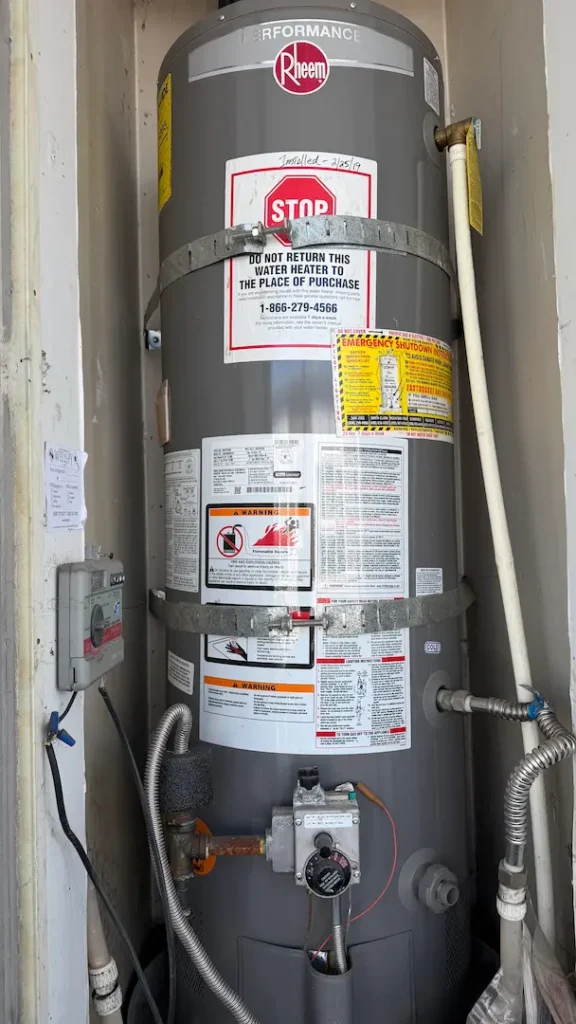
Water heaters play a vital role in a home’s plumbing system, and proper installation, safety compliance, and routine maintenance are essential for reliable performance and longevity.
From a rules and safety standpoint, water heaters must be installed in accordance with local building codes and manufacturer guidelines. Key requirements typically include proper seismic strapping (especially in areas like California), adequate clearance from combustible materials, and correct venting for gas-powered units. Temperature and pressure relief (TPR) valves are a critical safety component and must be properly installed with a discharge pipe directed to an appropriate location. This valve helps prevent excessive pressure buildup that could lead to tank failure.
Water heaters are also required to have proper connections, including approved flex lines or piping, and a shut-off valve on the cold water supply line. In many cases, expansion tanks are recommended or required to help regulate pressure changes within the plumbing system, particularly in closed systems.
Temperature settings are another important consideration. The recommended setting is typically around 120°F to reduce the risk of scalding while maintaining energy efficiency. Higher settings may increase the risk of burns and unnecessary energy consumption.
Routine maintenance is essential to extend the life of a water heater and ensure safe operation. One of the most important tasks is periodically flushing the tank to remove sediment buildup. Over time, minerals from the water settle at the bottom of the tank, which can reduce efficiency, cause unusual noises, and contribute to premature wear.
The anode rod should also be inspected periodically. This component helps prevent corrosion inside the tank and, when depleted, can lead to rusting and eventual tank failure. Replacing the anode rod when necessary can significantly extend the lifespan of the unit.
Inspecting the unit for leaks, corrosion, or signs of wear around fittings and connections is another key part of maintenance. For gas water heaters, ensuring proper venting and checking for any gas odors or soot buildup is important. For electric units, connections and wiring should be in good condition and free of damage.
Overall, following proper installation rules and performing regular maintenance helps ensure that a water heater operates safely, efficiently, and reliably while reducing the likelihood of unexpected failure or costly repairs.