Once Growth Stops, Decay starts.
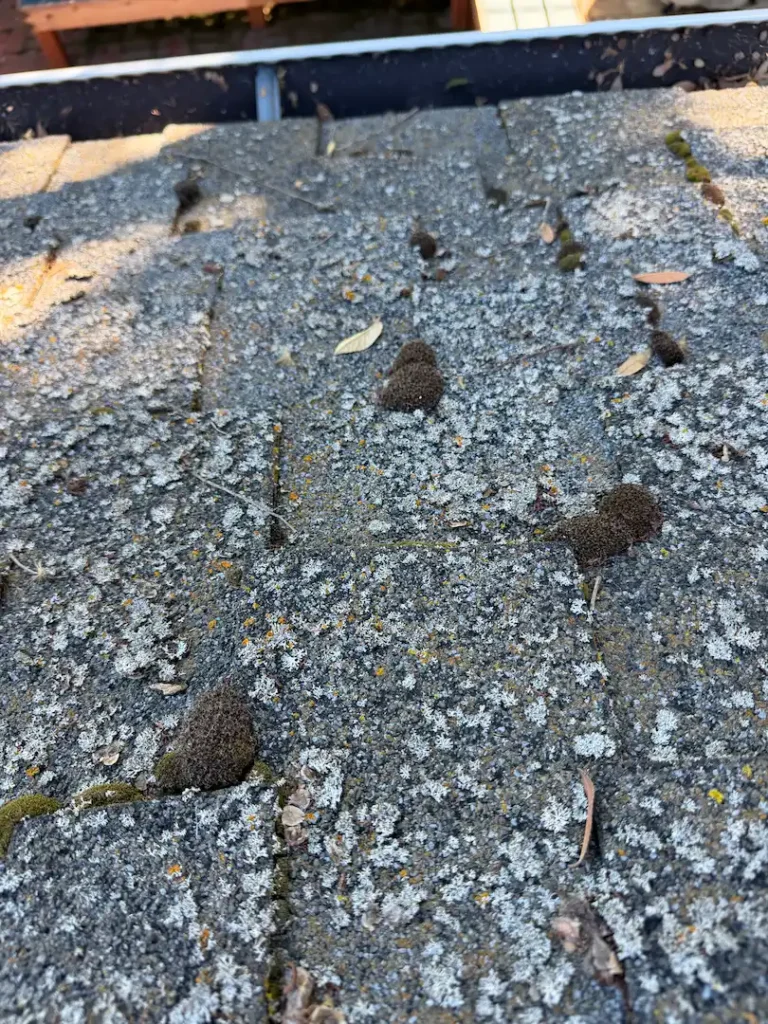
Moss growth on a roof is a common condition, particularly in areas with frequent moisture, shade, and limited sunlight exposure. While it may appear harmless, moss can have a negative impact on the overall condition and lifespan of roofing materials.
Moss retains moisture against the roof surface, preventing shingles from properly drying. Over time, this constant moisture exposure can lead to deterioration of roofing materials, especially in asphalt composition shingles. As moss grows and spreads, it can lift or separate shingles, creating pathways for water intrusion and increasing the risk of leaks.
During a roof inspection, moss is typically observed along shaded sections, north-facing slopes, and areas beneath overhanging trees where debris tends to accumulate. The inspector will note the extent and density of the moss growth, as well as any visible damage associated with it, such as curling, lifting, or deteriorated shingles.
In addition to trapping moisture, moss can contribute to debris buildup in gutters and along roof valleys, potentially affecting proper drainage. If left unaddressed, this can accelerate wear on the roofing system and lead to more costly repairs over time.
Removal of moss should be handled with care. Improper cleaning methods, such as pressure washing, can damage roofing materials. Recommended treatment typically involves gentle cleaning methods or the application of moss-inhibiting solutions. Preventative measures, such as trimming back overhanging branches to allow more sunlight and installing zinc or copper strips, may help reduce future growth.
Overall, the presence of moss is an indication of conditions that may be unfavorable for the roof’s longevity. Regular maintenance and timely treatment are important to help preserve the integrity and performance of the roofing system.